
Minnesota Pool Closing Season: Why a Pre-Winter Inspection Matters
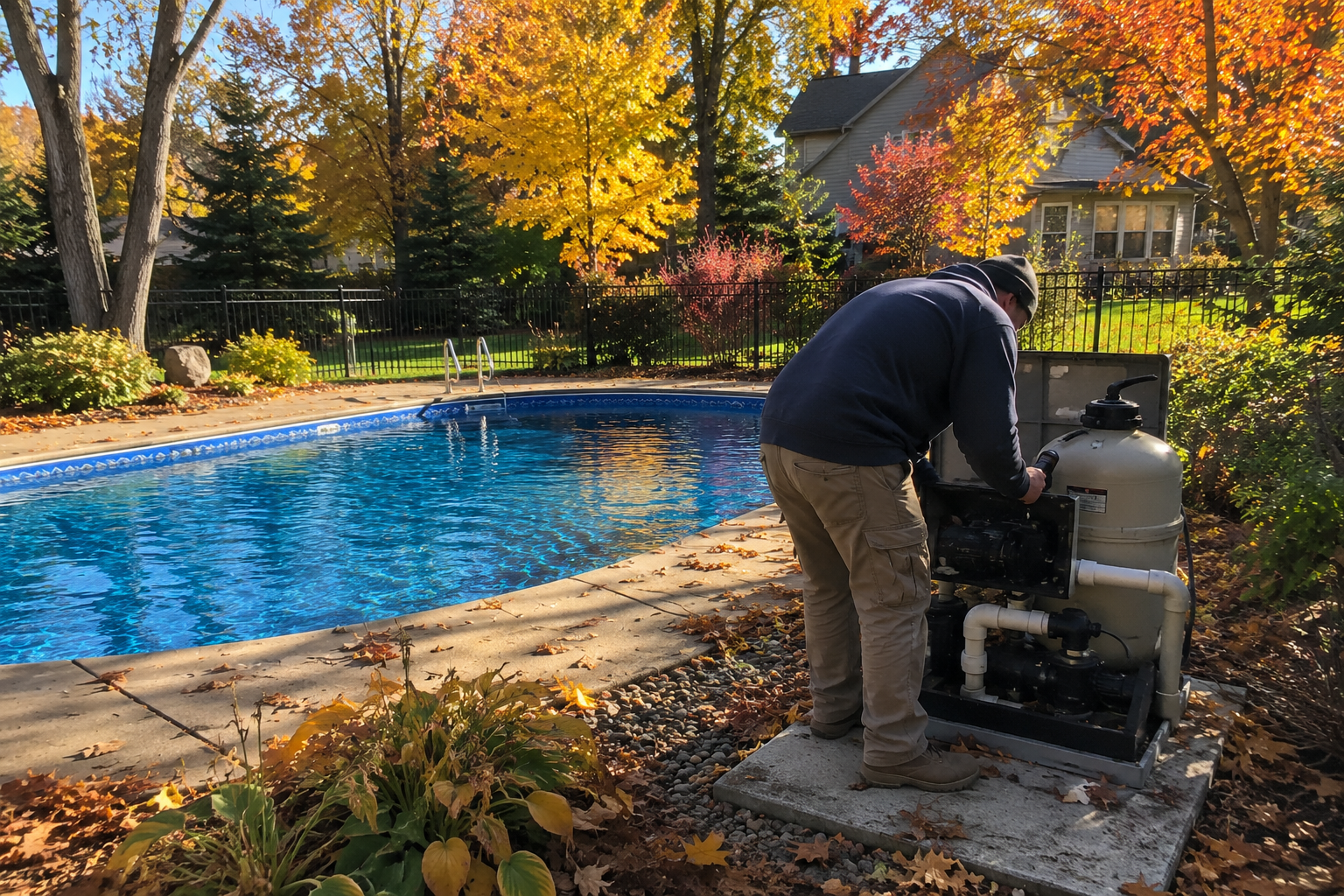
Pool closing season in Minnesota isn't just about draining lines and tossing on a cover. It's the last real chance you have to catch a small crack, a slow leak, or a failing pipe fitting before months of freezing temperatures turn it into a much bigger problem. At Pinnacle Pool and More, we've inspected pools across the Twin Cities metro heading into winter, and the pools that come through spring in the best shape are almost always the ones that got a professional look before the first hard freeze.
This guide covers what a pre-winter pool inspection actually checks, why timing matters so much in Minnesota, and what happens if you skip it.
Why Minnesota Winters Are Unforgiving on Pools
Cold climates are hard on pools in a way warmer states never have to deal with. Any water trapped in a hairline crack or a weak pipe joint will freeze and expand, turning a minor issue into structural damage over a single winter.
Minnesota ground temperatures stay below freezing for months at a time. A crack that's barely noticeable in September can widen significantly by the time you open the pool in May, because ice doesn't just sit still. It pushes outward with real force, repeatedly, every freeze-thaw cycle.
That's why the window before closing matters so much. It's the one point in the year when a technician can see the shell, plumbing, and equipment clearly, before everything gets covered and shut down for the season.
What a Pre-Winter Pool Inspection Actually Covers
A proper inspection goes well beyond a quick visual walk around the deck.
A thorough pre-winter inspection checks:
- Pool shell condition, including hairline cracks in concrete or gunite
- Vinyl liner integrity and seam wear
- Skimmer and return line connections
- Plumbing for early signs of leaks or pressure loss
- Pump, filter, and heater components
- Tile, coping, and deck areas for movement or separation
Each of these can hide a problem that's invisible from the surface. A slow leak, for example, often shows no obvious sign until water loss becomes noticeable, and by then the damage underground may already be extensive.
Leak Detection: The Step Most Homeowners Skip
Leak detection deserves its own mention because it's the most commonly overlooked step in a DIY closing routine. Pools naturally lose some water to evaporation, but losing more than a quarter inch per day usually points to an actual leak, not just summer heat.
Professional leak detection uses electronic listening equipment and pressure testing to pinpoint exactly where water is escaping, whether that's a fitting, a liner seam, or a plumbing line running underground. Finding that leak before winter means it can be fixed before freezing temperatures make the surrounding soil and pipe even harder to work with.
As a result, a leak caught in September is often a same-season repair. A leak discovered in April, after months of freeze and thaw, can mean a much larger excavation.
Trenchless Pipe Repair: Fixing Problems Without Tearing Up Your Yard
If an inspection turns up a damaged plumbing line, the traditional fix involves digging up the yard to access and replace it. Trenchless pipe repair solves the same problem without the excavation, using existing access points to line or reline damaged pipe from the inside.
This matters most in fall, when the ground is easier to work with than it will be after a hard freeze. Waiting until spring to address a known pipe issue often means dealing with thawing, saturated ground and a longer repair timeline.
What Happens If You Skip the Inspection
Pool owners who close their pool without a professional check often don't find out something was wrong until spring, and by then the options are more limited and more expensive.
Common spring discoveries that trace back to a skipped fall inspection:
- A hairline crack that widened into a structural repair
- A slow leak that dropped water levels significantly over winter
- A cracked fitting or pipe from water that wasn't fully drained
- Liner damage that went unnoticed until the cover came off
None of these are guaranteed to happen every year. However, the cost of a fall inspection is small compared to the cost of any one of these repairs, and catching a problem in September gives you far more repair options than discovering it in May.
When to Schedule Your Pre-Winter Inspection
Most Minnesota pool owners should schedule an inspection a few weeks before their planned closing date, while water is still in the pool and the system is still running. This gives a technician the chance to observe the equipment operating normally and check for pressure loss or unusual sounds that wouldn't show up on a drained, closed system.
Waiting until the pool is already closed for the season makes some issues, like plumbing leaks, much harder to diagnose.
Frequently Asked Questions
How much water loss is normal for a Minnesota pool?
Evaporation typically accounts for about a quarter inch of water loss per day, depending on temperature and wind. Losing more than that consistently usually signals a leak somewhere in the shell, liner, or plumbing that's worth having inspected.
Can a small crack really cause major damage over winter?
Yes. Water that gets into a hairline crack expands as it freezes, widening the crack with each freeze-thaw cycle. A crack that seems minor in fall can grow into a significant structural issue by spring if it's not addressed beforehand.
What is trenchless pipe repair, and how is it different from traditional repair?
Trenchless pipe repair fixes damaged plumbing lines from the inside using existing access points, avoiding the need to dig up the yard. It's typically faster and less disruptive than traditional excavation-based repair, and it's especially useful before the ground freezes.
Do I need an inspection every year, or just occasionally?
An annual pre-winter inspection is the safest habit, since new issues like liner wear, pipe fatigue, or shell movement can develop even in a pool that had no problems the previous year. Catching small issues early is almost always less expensive than discovering them after they've grown.
How long does a pre-winter pool inspection take?
Most inspections can be completed in under an hour, though the exact time depends on the pool's size, age, and whether any issues need closer investigation. It's a small time investment compared to the repairs it can help you avoid.
Should I schedule the inspection before or after closing my pool?
Before. An inspection performed while the pool is still filled and the equipment is running gives a technician the ability to observe pressure, flow, and performance in real conditions, which is much harder to assess once the system is shut down for winter.
If it's been a while since your pool had a professional look before closing, now is the time. Pinnacle Pool and More offers pool inspections, leak detection, and trenchless pipe repair throughout the Twin Cities metro. Contact us to schedule your pre-winter inspection before the first hard freeze hits.

Stay Informed with Our Blog
Get the latest tips and insights on pool maintenance, repair, and inspection.
.jpg)
View All Our Pool Services
From design to regular maintenance, explore our full suite of services designed to create and care for your pool.

Specializing in custom in-ground pools tailored to enhance your outdoor living space.

Offering a range of luxurious spas to complement your pool or serve as a standalone retreat.

Quick, Non-Invasive, No-Cutting Repairs for Your Pool Needs

Transform your pool area with beautiful, durable hardscaping options designed for elegance and functionality.

Expert replacement services to renew and protect your pool with high-quality vinyl liners.

Precise detection and repair of leaks to maintain the integrity and enjoyment of your pool.

Ensure the safety, functionality, and longevity of your pool with our comprehensive pool inspection services.
Ready to Dive into Your Dream Pool?
Contact us today to start your journey towards a backyard paradise with Pinnacle Pool and More.